
Interviews
SheSTEMs Awards 2024: What are the girls behind the awards doing today? – Part B
Aglaia (Lina) Ntokou

Magazine / Interviews , Insights , Science
By Athena Uzzo and Maria Hickey
---
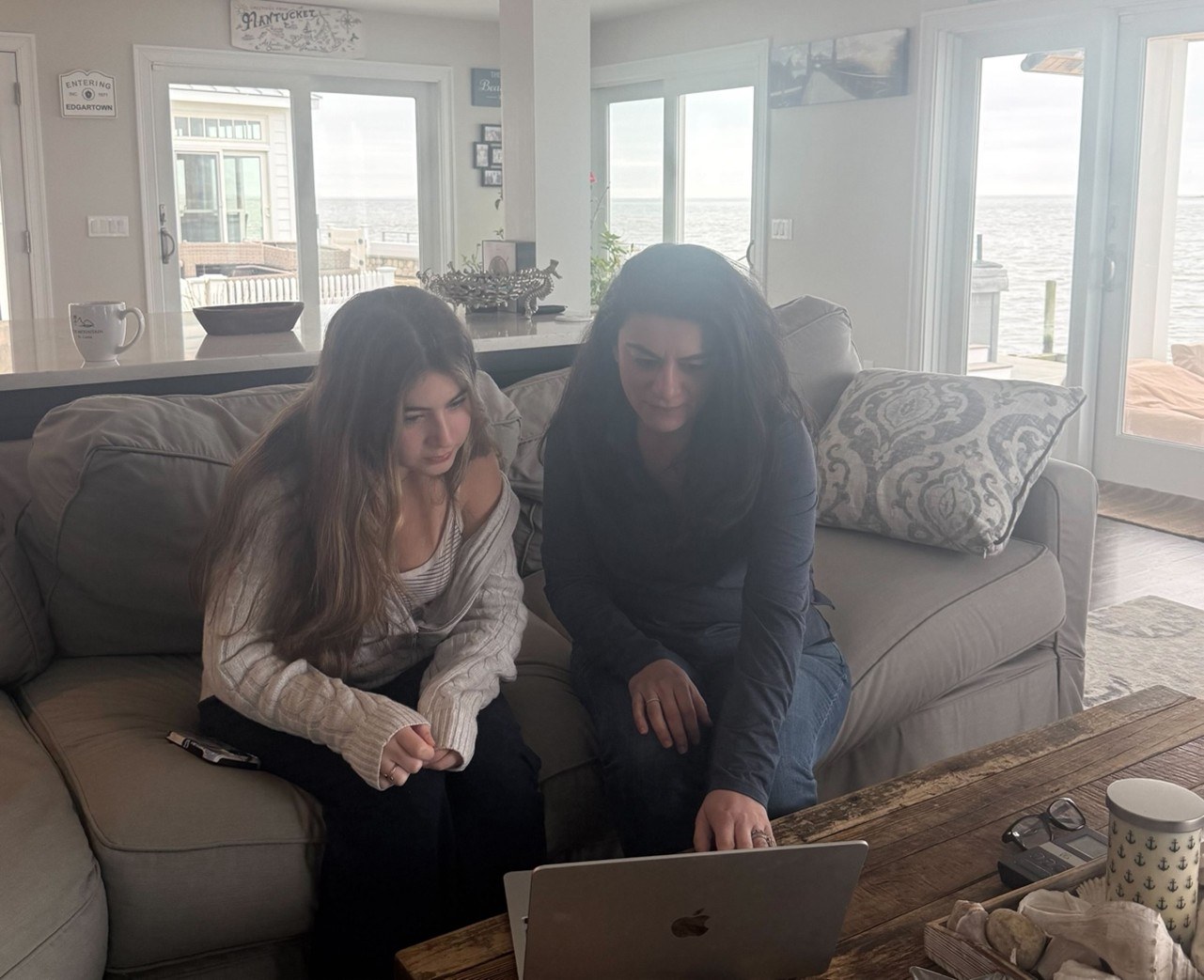
Athena’s Journey - Mother
I started in chemistry. I earned my Bachelor’s degree from Boston University, where I was convinced I would follow a path in organic chemistry lab work. Then, I went on to get a Master’s in pharmacology and toxicology at Dartmouth Medical School, where I studied low-dose arsenic toxicology and endocrine disruption. It looked, on the outside, like the beginning of a traditional scientific career in research.
The shift away from the bench didn’t happen immediately. The parts of my work that energized me most were the problem coordination: aligning stakeholders, translating between scientific and operational teams, and bridging the gap between what science could do and how organizations actually used it. I loved science, but I found myself increasingly drawn to the broader system around it — how research becomes therapy, how data drives decisions, how teams work together to carry an idea all the way to a patient.
My first move out of the lab took me into clinical project management, where I worked across a range of therapeutic areas — from endovascular medical devices to oncology and CNS drug trials. I didn’t fully understand it at the time, but I was building skills that would define my career: managing complex, high-stakes programs; communicating across disciplines; and keeping scientific work moving forward despite real operational constraints. That foundation led me into life sciences SaaS. When I joined Core Informatics, the Customer Success role was newly emerging at software companies, and I had the opportunity to build that function from the ground up. That experience — learning to scale a team, navigate an acquisition, and translate platform value into measurable outcomes for customers — is what brought me to where I am today. Working at the intersection of technology, data, and life sciences is where I do my best work.
Most recently, I was leading the Customer Success team at Claritas Rx, working with real-world patient data to help specialty and rare disease brands remove those access barriers. I’ve since joined Faro Health, which brings me back to where I started my career in clinical trials, but with a new perspective on how technology and data can shape study design earlier in the process. The path that brought me here — across research, clinical operations, and enterprise SaaS — has given me perspective on the full spectrum of the drug development lifecycle, from early science all the way through to the commercial systems that determine whether a patient actually gets the treatment they need. What makes this moment particularly exciting is how rapidly AI is changing what we can do: from identifying at-risk patients earlier to personalizing outreach in ways that genuinely improve adherence and outcomes. The pace of progress is unlike anything I’ve seen in this field before, and we’re still early.
For anyone navigating a similar transition: don’t think of your STEM background as a narrow track. It’s a set of analytical, problem-solving, and communication skills that travel well across industries and roles. The moves I made weren’t departures from science; they were extensions of it, applied to different problems.
---
Maria’s Journey - Daughter
I’m a junior in the STEM track at Daniel Hand High School, and I won’t pretend I have my path figured out. What I know is that biology has always felt like a natural way of thinking for me. In AP Biology, what I find most exciting isn’t memorizing systems — it’s understanding why those systems work the way they do, and what happens when they don’t. What strikes me most is how much the smallest mechanisms matter — how something at the molecular level can ultimately determine a patient’s outcome.
What surprises people is that I’m also deeply invested in fine arts — drawing and painting are a big part of my life, and I’m taking AP Art this year alongside AP Biology. These two things don’t feel separate to me. Art has taught me patience, attention to detail, and the habit of looking at something from multiple angles before deciding what it is. Those happen to be exactly the skills you need when studying complex biological systems.
Looking at my mom’s career, what stands out to me is that she never stopped being curious, even when her role changed completely. She moved from the lab to managing programs to leading teams — but the thread running through all of it was always the science and what it could mean for patients. That’s the kind of career I’d want to build: one where the work keeps evolving, but the reason for doing it stays clear.
---
We are both Greek women in STEM, and that’s not incidental to our story. Our family’s relationship with education and hard work spans three generations. Athena’s mother was born in Greece, came to the United States at seventeen, and earned a degree in mathematics. Her belief that education was the foundation for everything else — and the work ethic she brought to building a life in a new country — shaped how Athena approached her own career and, in turn, how Maria approaches hers. Growing up, education wasn’t just encouraged; it was expected, and taken seriously, because it reflected on your family and your community as much as on yourself. That sense of obligation — to do good work, to contribute something real — is something all three of us carry.
The specific work looks different in your teens and in your forties. The spirit of it, we think, is the same. And if there’s one thing we’d say to every woman reading this, at whatever stage she finds herself: trust the pattern that keeps showing up. It’s trying to tell you something.
Athena and Maria can be reached through their respective LinkedIn profiles!
Aglaia (Lina) Ntokou
Maria Kyriazi
Thaleia-Dimitra Doudali
Dorothea Maneta