
Interviews
SheSTEMs Awards 2024: What are the girls behind the awards doing today? – Part B
Aglaia (Lina) Ntokou

Magazine / Interviews , Science , Technology
Maria Christakis is a professor at TU Wien, where she leads the Software Engineering research unit. Her research develops techniques and tools to improve the reliability and trustworthiness of software, with contributions spanning program analysis, testing, verification, and debugging.
Originally from Greece, Maria received her diploma in Electrical and Computer Engineering from the National Technical University of Athens and her PhD in Computer Science from ETH Zurich. Before joining TU Wien in 2022, she held research positions at the Max Planck Institute for Software Systems, the University of Kent, and Microsoft Research. Her work has been recognized with an ERC Starting Grant, several competitive research grants from public and industry funders, a Google Research Scholar Award, and an Amazon Research Award. She is also a member of the Young Academy of the Austrian Academy of Sciences. In 2026, she received the ACM-W Rising Star Award, presented by the Association for Computing Machinery (ACM), the world’s largest scientific and educational computing society. The award recognizes women whose early-career research has had a significant impact on the computing discipline worldwide.
Prof. Christakis, you have had an inspiring academic journey, with positions at various prestigious institutions. Your journey started at the National Technical University of Athens. What first drew you to informatics, and how did you decide to take each step along the way?
I started at the National Technical University of Athens studying Electrical and Computer Engineering. At first, I did not know exactly which direction I would take, but when I took my first computer science courses, I was really struck by the creativity of the field. I liked that computing combined abstract thinking with the ability to build things that actually work and can have a practical impact. That combination was very exciting to me and gradually drew me toward informatics and research. Each step after that helped me understand better what kind of researcher I wanted to become. During my PhD at ETH Zurich, I became deeply interested in software reliability and program analysis. At Microsoft Research, I had the chance to experience research in an industrial setting and to see how foundational ideas can connect to real-world software development. Later, the Max Planck Institute for Software Systems offered an outstanding research environment, which allowed me to deepen and broaden my work.
Joining TU Wien was a very natural next step. It is a strong university with an excellent informatics faculty, and Vienna is a wonderful place to live and build a research group. Looking back, the common thread has been following environments where I could grow, work with excellent people, and pursue research that I found both intellectually exciting and practically meaningful.
Your research focuses on the intersection of software engineering and formal methods. What core problems are you trying to solve and why do they matter today?
The core problem I am interested in is how to develop automatic techniques that make software more reliable. Modern software systems are often too large and complex to reason about manually, so we need tools that can help developers find bugs, verify important properties, understand failures, and gain confidence in the systems they build. This matters more than ever because software is everywhere: in communication, finance, health care, transportation, education, and critical infrastructure. At the same time, the way software is produced is changing rapidly. Large language models can now generate large amounts of code very quickly, but that code is not necessarily correct, secure, or reliable. This makes automatic testing, verification, and program analysis even more important.
My work aims to advance these techniques and make them useful in practice, so that developers can build software systems that are not only powerful, but also trustworthy.
What keeps me going is that I genuinely love what I do. I care deeply about my research topics, I enjoy working with my students, and I find it very motivating to push the state of the art, even if progress sometimes comes slowly.
You have received highly competitive research grants, including a Starting Grant from the European Research Council, a Google Research Scholar Award, and an Amazon Research Award. What have these grants enabled you to achieve, and what do you think is the key to succeeding in such competitive funding programs?
These grants have made a very concrete difference. The ERC Starting Grant and other public research grants have allowed me to grow my group, support excellent PhD students and postdocs, and pursue a longer-term research agenda with more depth and continuity. That kind of support is extremely valuable, because ambitious research often needs time, stability, and the right people around it.
Industrial research awards have been valuable in a complementary way. They help create connections with companies and give insight into the kinds of problems that arise in practice. I think this exchange is important: it can make research more grounded, and it can also lead to techniques and tools that are useful beyond academia.
For competitive funding, I think the key is to identify problems that are both scientifically interesting and genuinely relevant. A strong proposal should explain why the problem matters now, what is missing in the current state of the art, and why the proposed approach could make a real difference. Especially for programs such as the ERC, I think it is important to propose an innovative and ambitious vision, while still presenting a credible plan for how to make progress.
You received the 2026 ACM-W Rising Star Award, which recognizes women whose early-career research has had a significant impact on the computing discipline worldwide. What does this recognition mean to you, both personally and professionally?
This recognition means a great deal to me! It feels like an important milestone, because it recognizes many years of work, persistence, and the long hours that go into building a research agenda and a group.
Professionally, it is very encouraging to see that the community values my contributions and believes in the potential of my work. Research can sometimes be a long process, with impact becoming visible only gradually, so this kind of recognition is especially meaningful.
Personally, I find it very moving. It reminds me of all the people who have supported me along the way, including mentors, collaborators, students, colleagues, friends, and family. It also gives me energy and motivation for the next steps.
Your journey is truly inspiring, with so many achievements and recognitions early in your career. Have there been challenging moments along the way? What motivates you to keep moving forward and striving for excellence?
There have been many challenging moments along the way. Research can be difficult in many ways: ideas do not always work, papers get rejected, funding is uncertain, and academic life often comes with many competing professional and personal responsibilities. One particularly challenging period was preparing my ERC Starting Grant proposal shortly after having a child. It was an intense time, and it required a lot of persistence, organization, and support.
What keeps me going is that I genuinely love what I do. I care deeply about my research topics, I enjoy working with my students, and I find it very motivating to push the state of the art, even if progress sometimes comes slowly. Seeing ideas grow into results, tools, and papers, and seeing students develop as researchers, gives me a lot of energy.
What advice would you give to young students and aspiring researchers who want to pursue a career in STEM and academia?
My advice would be to work hard, be persistent, stay focused on your goals, and allow yourself to be ambitious. Research and academia can be challenging, and progress is not always immediate, so it is important not to get discouraged too quickly. I would also encourage young students and researchers to seek out good mentors and supportive environments. The people around you can make a huge difference, both in the opportunities you encounter and in the confidence you build.
Finally, take initiative, even when things feel uncertain. Ask questions, try things out, apply for opportunities, and learn from the process. Ambition matters, but it is not enough on its own. Curiosity, resilience, and choosing people and environments that help you grow are just as important.
Find out more about Maria Christakis on her personal website and connect with her on LinkedIn.
Aglaia (Lina) Ntokou
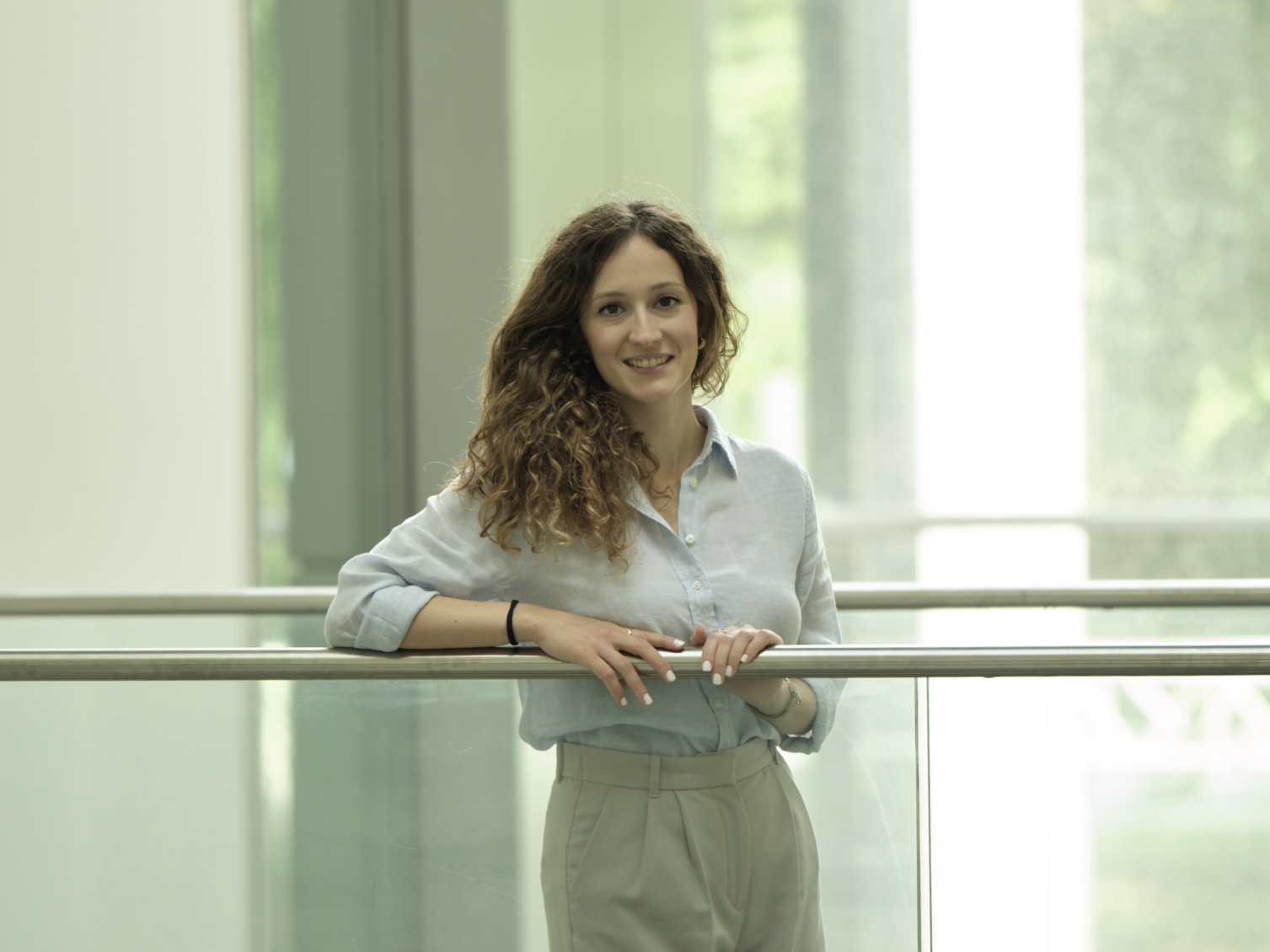
Maria Kyriazi

Aglaia (Lina) Ntokou
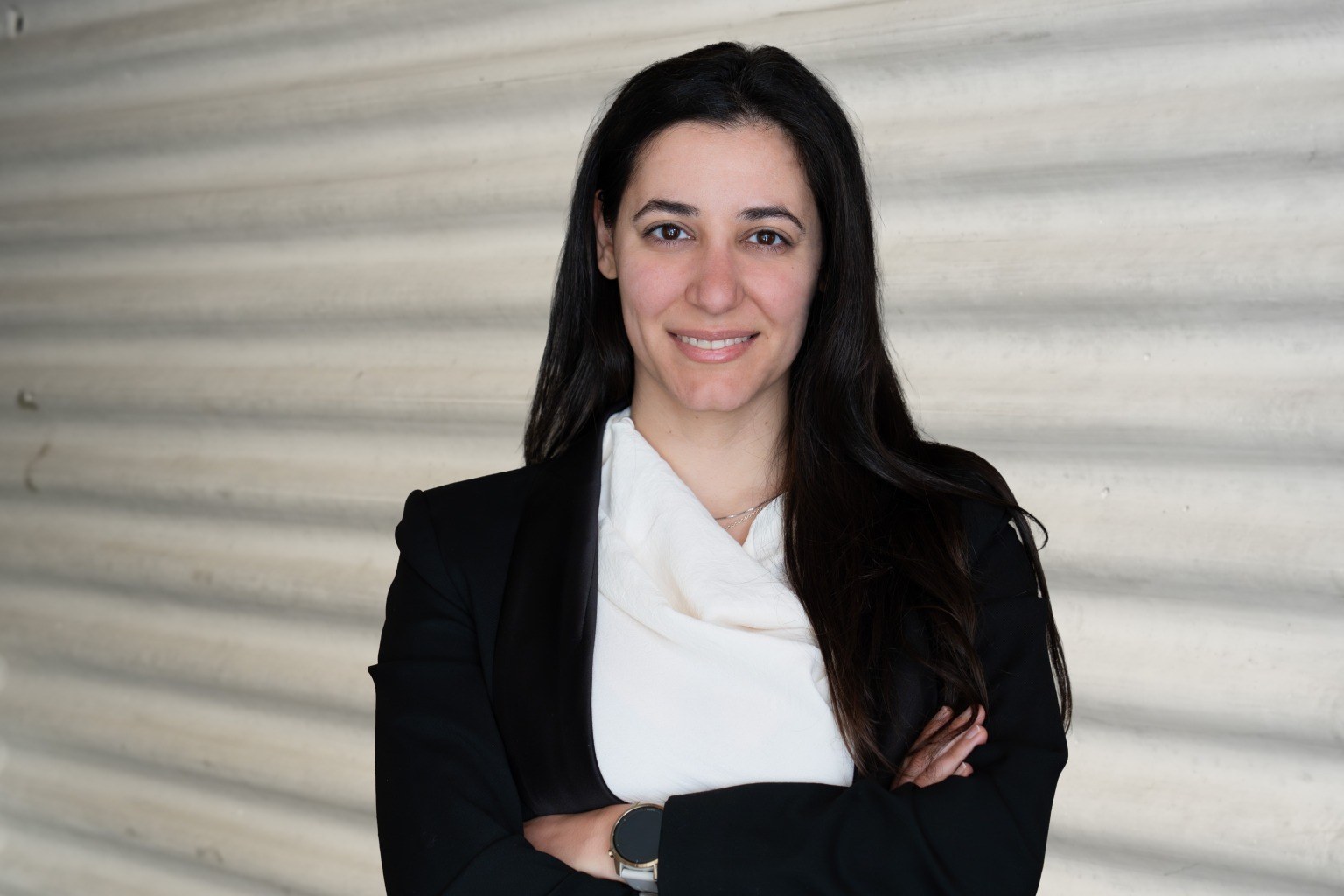
Dorothea Maneta